GSM repeater or DAS: which one should you choose?
Roel De Frene
You have decided that your building needs better mobile coverage. Then comes the key technical choice: a repeater or a DAS? The answer does not depend on the brand name or the price of the device, but on your building, your users and the signal available outside.
In this article we explain the difference, so you know which solution makes sense for your situation — and which questions to ask an installer.
What is a GSM repeater?
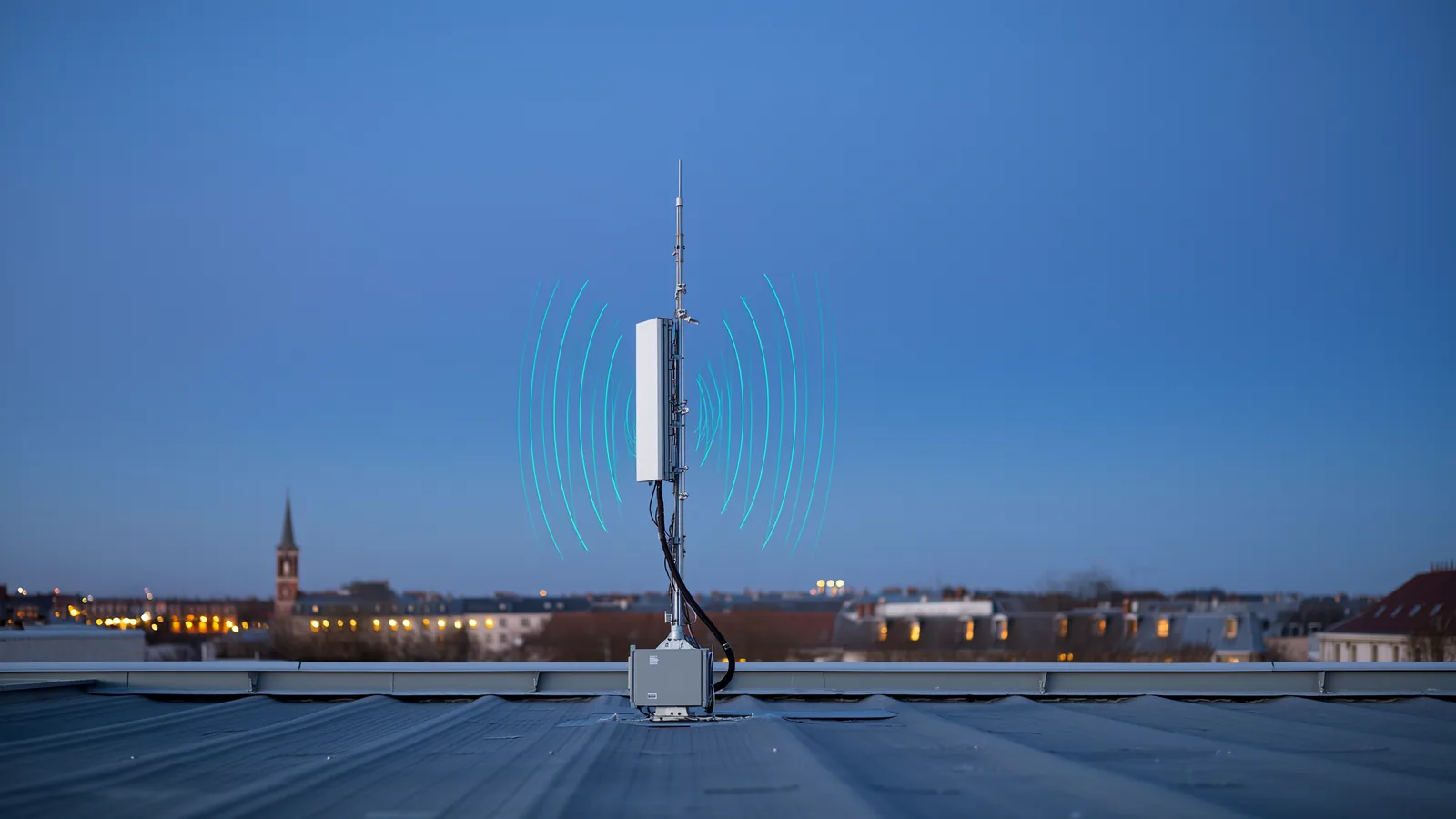
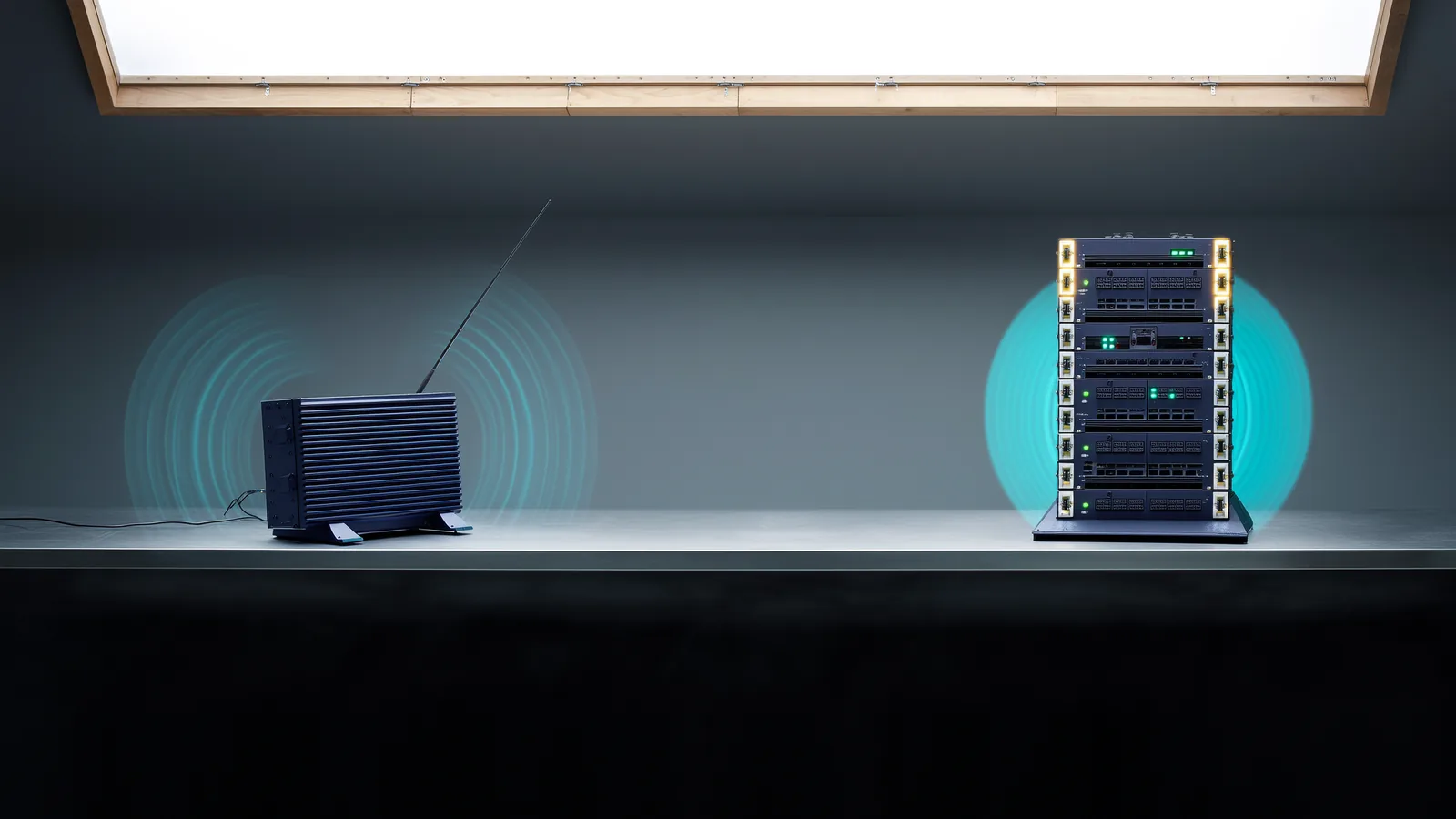
A repeater is the simplest form of signal amplification. An outdoor antenna picks up the signal from the nearest mast. An amplifier makes it stronger. Indoor antennas re-broadcast it in the zones where you need reception.
A repeater works best in smaller buildings where a stable signal is still available outside. You can use it for one or a few rooms, but also for a whole floor if distances remain limited.
Advantages: lower entry cost, compact equipment, fast installation.
Limitations: less suitable for large or deep buildings, sensitive to a weak outdoor signal and often harder to scale to multiple operators.
What is a DAS?
A DAS — Distributed Antenna System — is a network of antennas that distributes the signal throughout the building. Instead of one indoor antenna you get several antennas fed by a central unit. Coverage stays even, including across multiple floors, in basements or in long buildings.
A DAS is the standard for larger sites, underground zones and buildings where several operators must work at the same time. The system can also include ASTRID, DAB+ or indoor GPS in one shared infrastructure (MO-DAS).
Advantages: scalable, even coverage, multi-operator, suitable for complex buildings.
Limitations: higher design and installation cost, more engineering and careful validation required.
Repeater or DAS: the differences at a glance
| Feature | Repeater | DAS |
|---|---|---|
| Building size | Small to medium | Medium to very large |
| Number of floors | Limited | Multiple floors and zones |
| Number of operators | One or a few | All operators at once |
| Underground zones | Limited | Strong point |
| Weak outdoor signal | Difficult | Solvable with multiple sources/antennas |
| Scalability | Limited | High |
| Installation complexity | Low | High |
| Entry cost | Lower | Higher |
When do you choose a repeater?
A repeater is a good choice if:
- You have a small or clearly laid-out building, such as a shop, hospitality venue or small office.
- A usable signal from the operators you need is still available outside.
- The weak zones are limited: one basement, one meeting room or one corner of the building.
- You mainly need to support one operator or a limited number of users.
- You want a first improvement quickly and on a limited budget.
Note: a cheap consumer repeater is not the same as a professional repeater. Consumer devices often cover only one operator, are not always permitted and can interfere with the network if badly tuned. A professional repeater is measured, tuned and validated.
When do you choose a DAS?
A DAS is the better choice if:
- Your building is large or has several floors, wings or halls.
- You have underground zones: car parks, basements, tunnels or technical rooms.
- Several operators must be covered at once: Proximus, Orange and BASE/Telenet.
- The outdoor signal is weak or unevenly distributed across the building.
- You expect to grow: more staff, more visitors, more data traffic.
- You want to combine ASTRID, DAB+ or indoor GPS in one system.
In those situations a repeater is often an interim solution that has to be replaced later. A DAS is then the more sustainable investment.
Why the outdoor signal determines everything
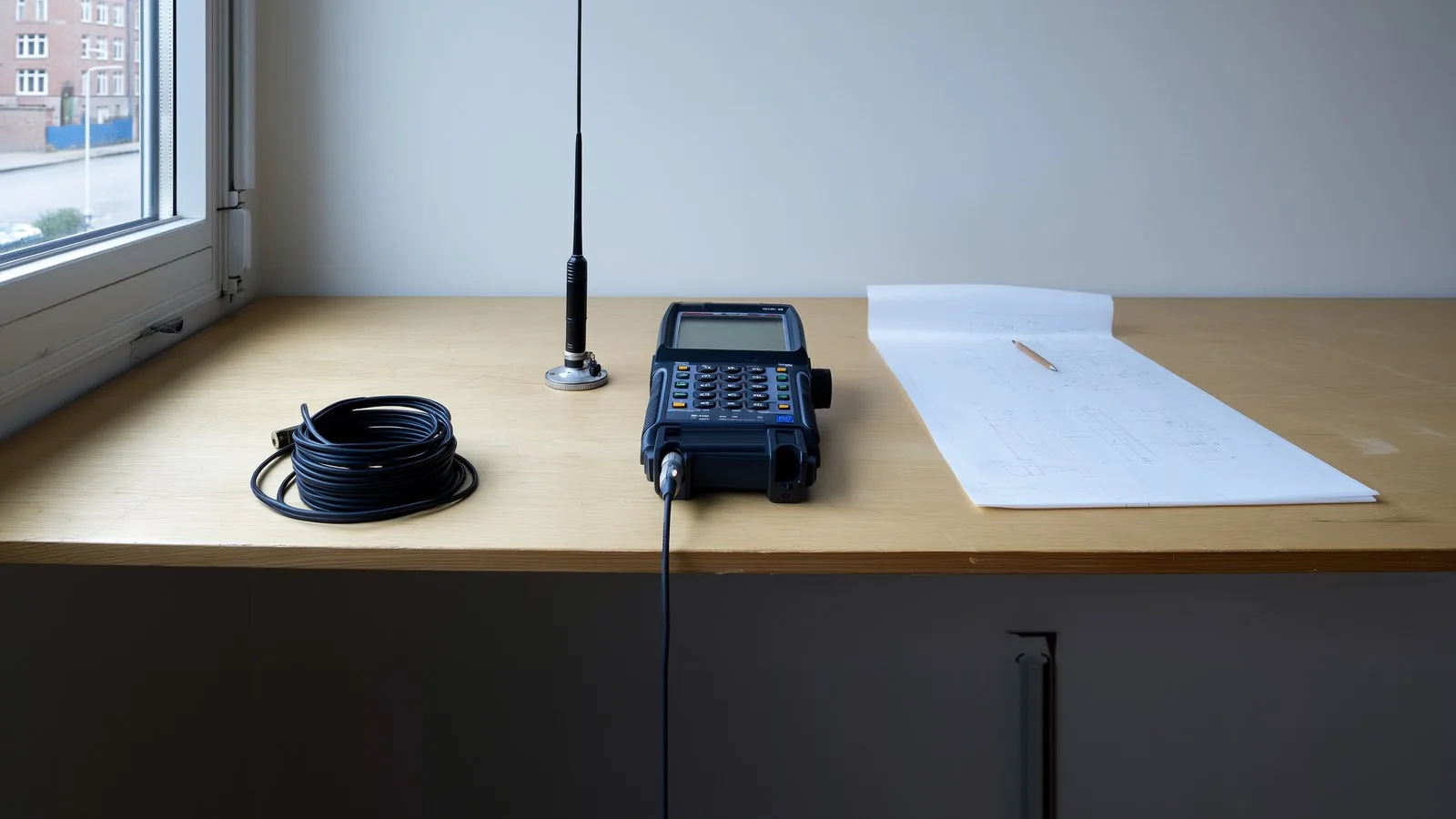
No system can create a signal that is not there. That is why a professional installer always measures the signal outside and inside first:
- Which operators are available outside?
- How strong is the signal on the façade and on the roof?
- Are the dead zones structural, or the result of one bad spot?
- How many users and devices need to work at the same time?
Based on that measurement it becomes clear whether a repeater is enough or a DAS is needed. Without a measurement the choice is a guess — and the wrong choice costs more than the measurement itself.
What is the price difference?
A repeater usually has a lower entry cost than a DAS. But you should not compare the price of a device with the price of a system. With a DAS you pay for the design, the antennas, the cabling, the installation and the validation. That investment is often offset by the cost of a second or third corrective measurement.
For a realistic range, see our article on the cost of GSM signal boosting. For the technical explanation of the full process, read how GSM signal boosting in buildings works.
Common mistakes
- Buying a consumer booster and expecting it to cover a building. That rarely works and is not freely permitted in Belgium.
- Choosing a single operator. Visitors and suppliers use other providers; extending later costs more.
- Not having a measurement carried out. Without a measurement report you do not know whether coverage has really improved.
- Oversizing. More antennas is not always better; the right design matters more than lots of equipment.
- Ignoring ASTRID or future expansion. A combined design prevents duplicated infrastructure.
Frequently asked questions
Can I upgrade from a repeater to a DAS later?
Yes, but it is rarely a matter of replacing one device. Usually the antennas, cabling and central unit all need to be reviewed. That is why it is better to choose the right architecture from the start.
Does a DAS work in a basement or car park too?
Yes. A DAS is particularly strong in underground zones, because you can place several antennas where a repeater has only one coverage point.
Do I need a DAS for a small office?
Not necessarily. If the building is small and the outdoor signal stable, a professional repeater may suffice. A measurement provides the answer.
Can a DAS cover all operators at once?
Yes. A multi-operator DAS supports Proximus, Orange and BASE/Telenet at the same time. That is precisely the difference from many consumer solutions.
Have your situation assessed
Unsure between a repeater and a DAS? We measure your building, assess the outdoor signal and propose the simplest solution that genuinely solves your situation. Request a free analysis or see our professional GSM signal boosting.