GSM signal boosting in buildings: how does it work?
Roel De Frene
You have five bars outside, but inside every call drops. In a basement, a car park, a new office or a historic building, that is no exception. Modern buildings are often better insulated than mobile networks can cope with. GSM signal boosting brings the signal back inside — but only if the system is correctly designed, installed and validated.
In this article we explain how GSM signal boosting works, when you need a repeater or a DAS, what a professional installation costs and what to watch out for in Belgium.
Why GSM signals so often drop indoors
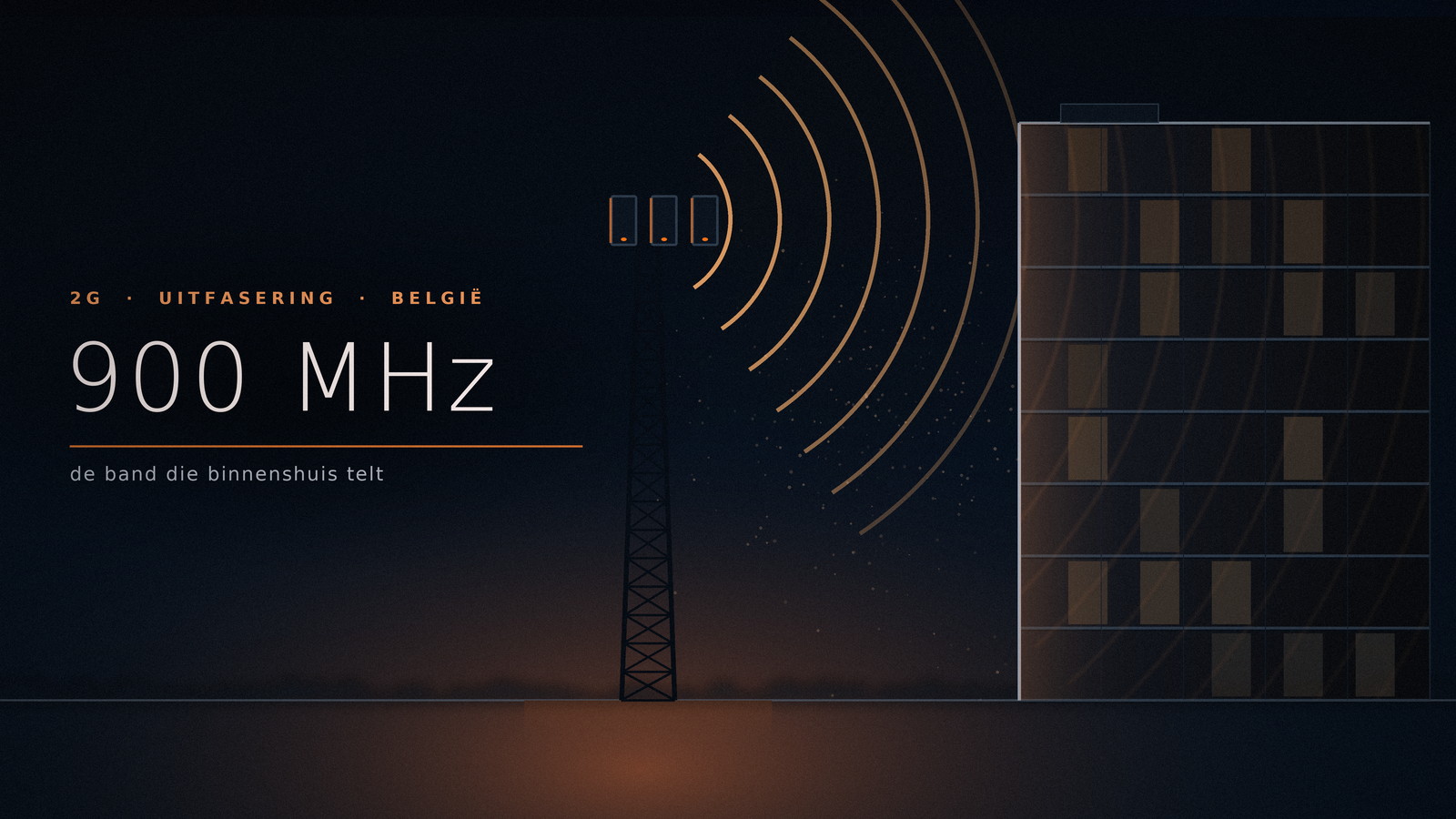
A mobile signal is a radio wave. It behaves like light: it passes easily through air, but is stopped by dense materials. In buildings there are four culprits:
- Reinforced concrete and concrete cores: the steel in concrete strongly attenuates radio signals, especially on the innermost floors.
- Insulating glass with a metal coating: energy-efficient glazing keeps heat out — and GSM, 4G and 5G with it.
- Metal façades and roof panels: industrial halls and warehouses turn into a Faraday cage.
- Underground spaces: car parks, basements and tunnels have no direct line of sight to a mast.
The result is not just poor reception. Payment terminals fail, staff have to go outside to make calls, visitors cannot book and emergency services lose their radio connection. In buildings with a public or safety-critical function, that last point is often a legal matter too.
When is GSM signal boosting needed?
Not every building with a weak signal needs a full DAS straight away. The threshold is roughly this:
- Indoors you have fewer than two bars, or calls drop regularly.
- The weak zones are structural: basements, car parks, concrete core areas, meeting rooms without an exterior wall or production halls with metal walls.
- Several operators are involved: staff, visitors and suppliers do not all use the same provider.
- Mobile communication matters operationally: payments, bookings, interventions, reaching staff or emergency services.
A simple measurement quickly shows whether a small repeater is enough or a DAS architecture is needed. Without a measurement, a price or solution is always a guess.
What exactly is GSM signal boosting?
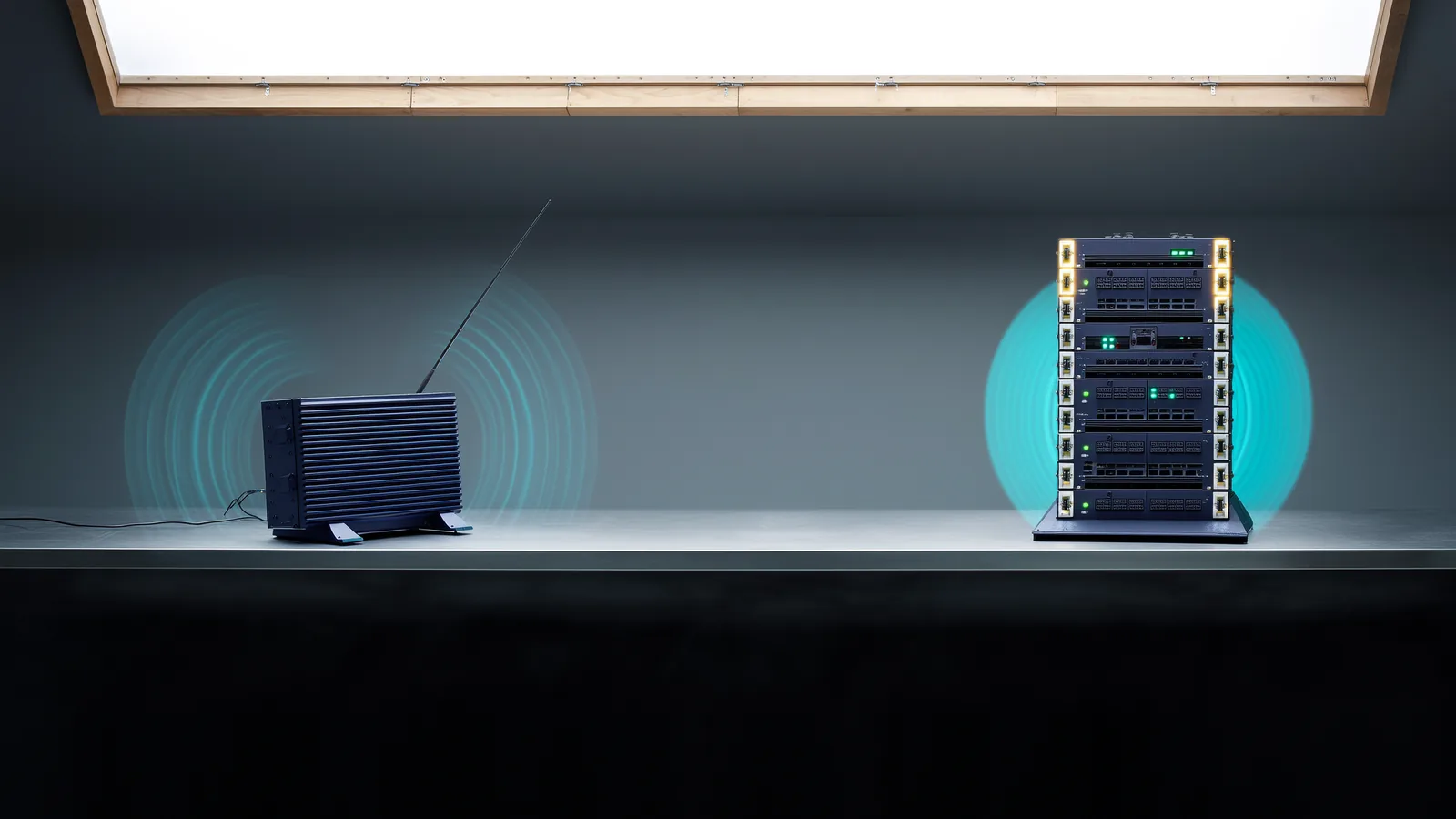
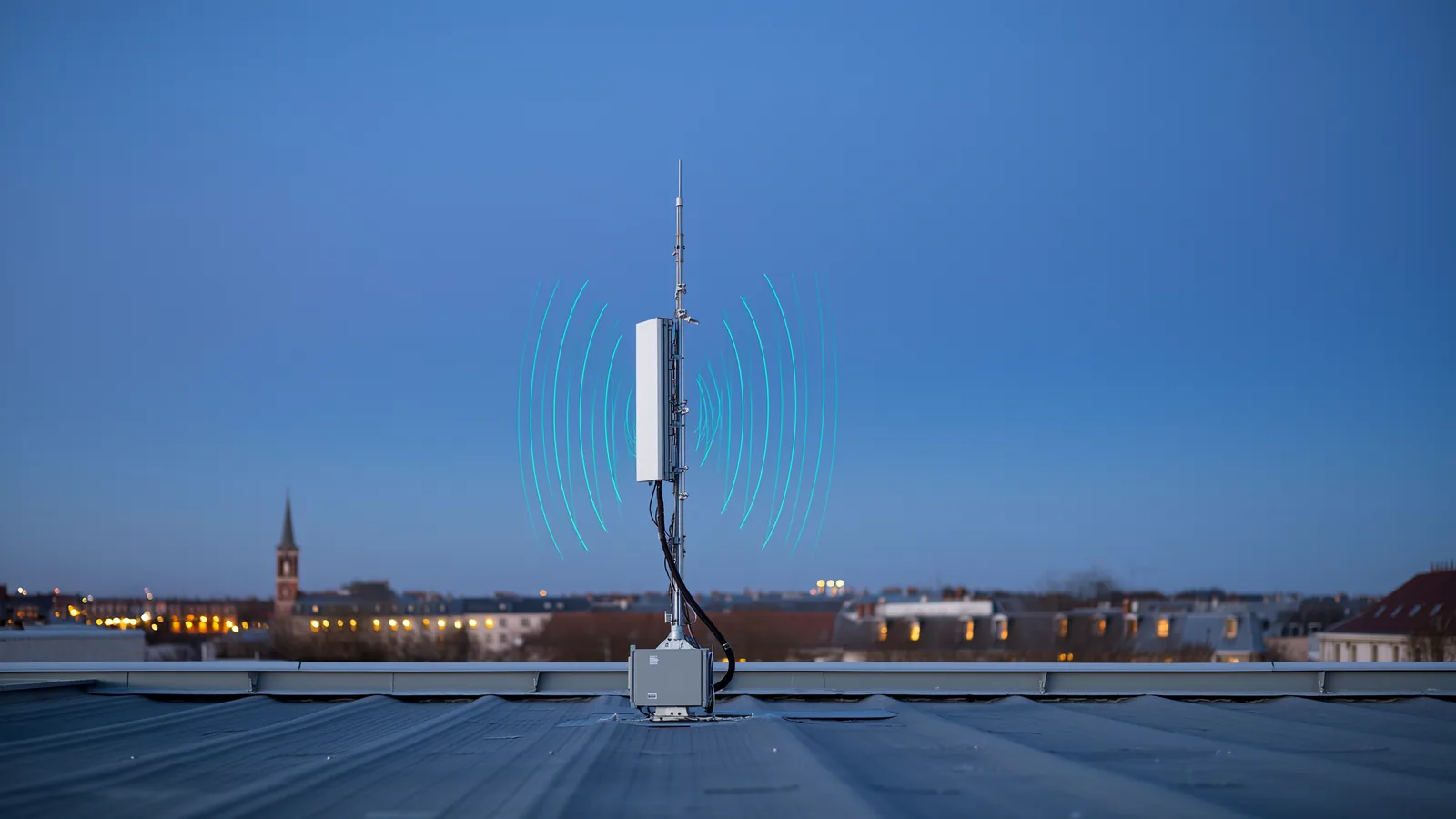
A GSM booster is a bidirectional system. An outdoor antenna picks up the signal from the nearest mast. An amplifier makes it stronger. Indoor antennas distribute it to the zones where it is needed. That is how it works for all operators at once: Proximus, Orange and BASE/Telenet.
There are two families:
- Repeater: amplifies the existing outdoor signal and re-broadcasts it indoors. Suitable for smaller buildings where a stable signal is still available outside.
- DAS (Distributed Antenna System): a network of antennas that distributes the signal throughout the building. The standard for large sites, underground zones and buildings with little external signal.
A badly tuned repeater can interfere with the outdoor network. That is why the quality of the installation matters more than the price of the box. More on that in our article on DIY repeaters.
Repeater or DAS: which one do you choose?
The choice depends on four factors:
- Building area and number of floors. Up to a few hundred square metres a repeater is often enough; larger sites call for a DAS.
- Outdoor signal strength. If there is already little signal outside, you need to work with a different source or provide several antennas.
- Number of operators. For one operator a simple repeater may be possible; for all operators at once a multi-operator system is needed.
- Safety-critical zones. Car parks, tunnels and public buildings often require ASTRID coverage, best combined with GSM in a single MO-DAS.
A professional analysis first measures the signal outside and inside, then determines the right architecture. Without a measurement, every quote is a guess.
How does a professional installation work?
At Mercuron every project follows the same five steps:
- Free analysis: we inspect the building, the materials and the zones with poor reception.
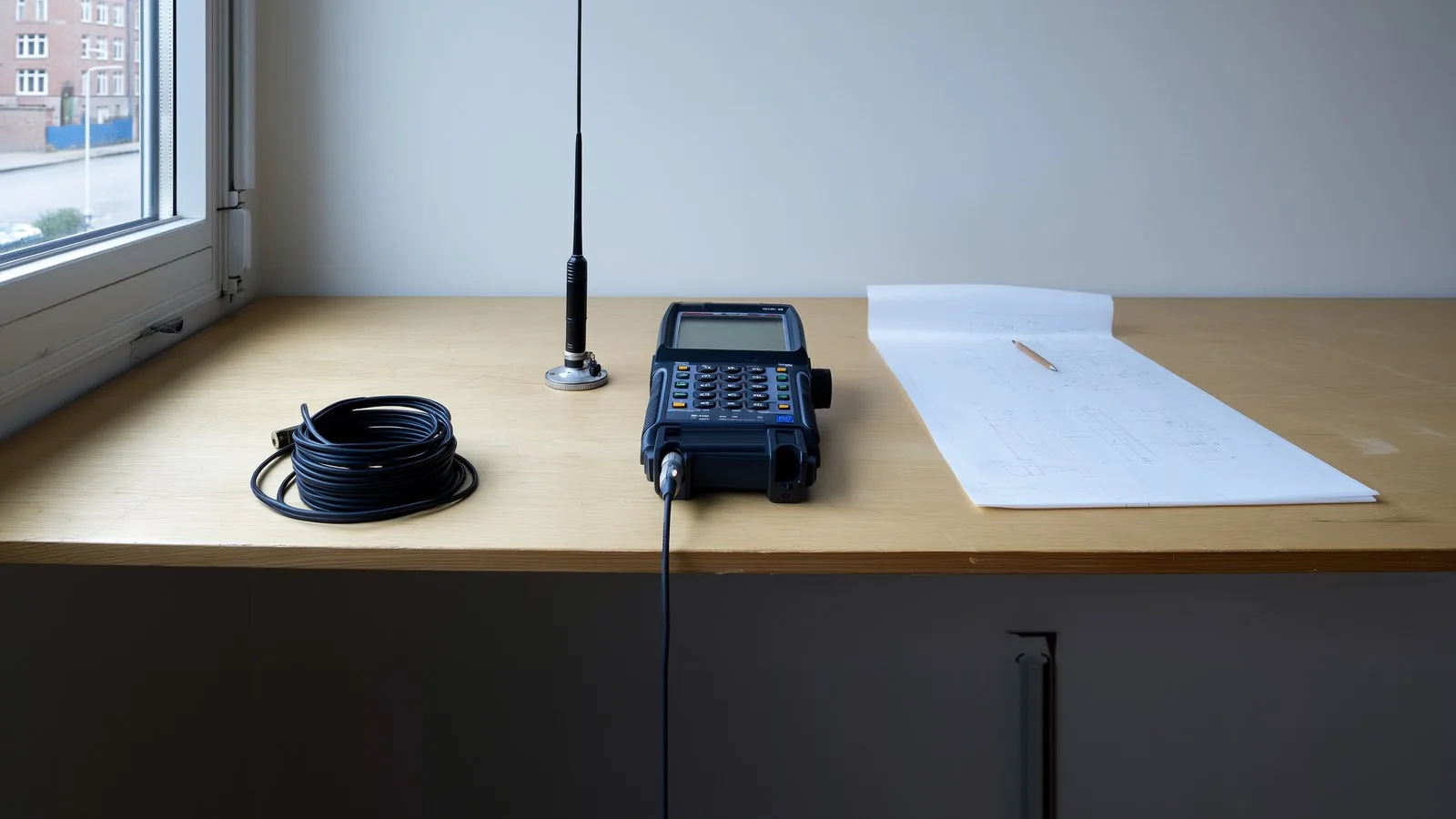
- Site survey and RF measurement: we measure every operator's signal and map the dead zones precisely.
- RF engineering: we design the antenna placement, cabling, amplifiers and splitters — tailored to the building.
- Installation: our technicians install the system discreetly and in line with technical standards.
- Validation and aftercare: we measure afterwards and deliver a measurement report. You can see in black and white which zones are covered and at what signal level.
That measurement report is also the evidence at handover, for later inspections or for an ASTRID dossier.
What does GSM signal boosting cost in Belgium?
The price depends on the area, the number of floors, the building structure and the networks required. As a guideline:
- Basic installation: from €9,000 — around 6 antennas, for example an office, shop or hospitality venue.
- Large building or industrial site: €25,000 – €35,000 — 20 or more antennas across several floors or halls.
The exact price follows the free analysis. That way you avoid oversizing and do not pay for antennas you do not need.
Is GSM signal boosting permitted in Belgium?
Not every repeater is simply permitted. In Belgium, rules from the BIPT and the operators apply. Consumer repeaters often cover only one operator and can interfere with the network if badly tuned. Mercuron works exclusively with compliant equipment, sizes the power correctly and tunes the system to the operators' requirements.
For buildings with a public function, an ASTRID obligation may also apply. That coverage is designed and validated separately, but can be accommodated in a single combined installation with GSM.
Unsure whether your building falls under the ASTRID obligation? A free coverage analysis helps you assess that quickly.
Which buildings benefit?
GSM signal boosting pays off in virtually every building where mobile communication matters operationally:
- Offices and high-rises with lots of glass and concrete
- Hotels, hospitality venues and shops where guests want to call, book and pay
- Hospitals, care homes and healthcare institutions
- Car parks, basements and logistics sites
- Industrial halls with metal structures
- Public buildings and schools
Mercuron installs throughout Belgium. See professional GSM signal boosting by building type or our projects for concrete examples. Also locally: Antwerp, Ghent, Brussels, Leuven and Kortrijk.
Why bring in a specialist?
A good installation is more than an amplifier on the wall. The difference lies in the measurement, the calculation, the antenna placement and the validation afterwards. A badly designed system does not cover every zone, does not work for every operator or causes interference. A specialist prevents you from paying twice.
Mercuron is a Belgian team of RF engineers, technicians and project managers. We have completed more than 1,000 installations, from small offices to hospitals and car parks. One point of contact from analysis to aftercare.
Frequently asked questions
Does GSM signal boosting work for all operators?
Yes. A professional system supports Proximus, Orange and BASE/Telenet at the same time. Visitors with a different provider are covered too.
Can I install a GSM booster myself?
Consumer repeaters cover at most a few rooms and are not freely permitted in Belgium. A badly tuned booster can interfere with the network. For a building with several zones or operators, a professional design is required.
How long does an installation take?
After the analysis and design, installation usually takes from a few days to a few weeks, depending on the size and complexity of the building.
What if there is already little signal outside?
Then we assess whether a repeater makes sense or a different source is needed. In some cases we work with several outdoor antennas or a DAS architecture. We determine that during the measurement.
Do I get proof of coverage?
Yes. After installation we carry out a validation measurement and deliver a measurement report with the covered zones and signal levels.
Have your building analysed
We map the coverage situation free of charge and propose a solution — with no obligation. Request an analysis or call +32 9 395 06 82.